Inside unsolved murder of Leah Freeman 22 years after decomposing body found - as new evidence sees boyfriend WALK FREE

Michael Green
Published Aug 30, 2026
A MAN convicted of killing his high school girlfriend has walked free because of newfound evidence - as her murder continues to haunt her small town.
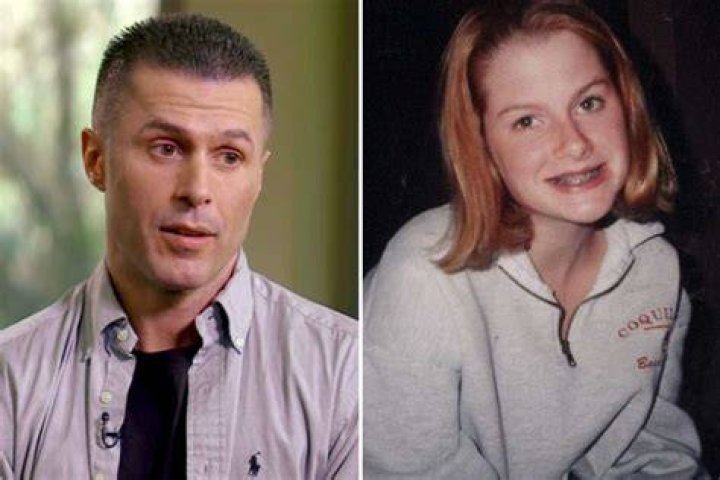
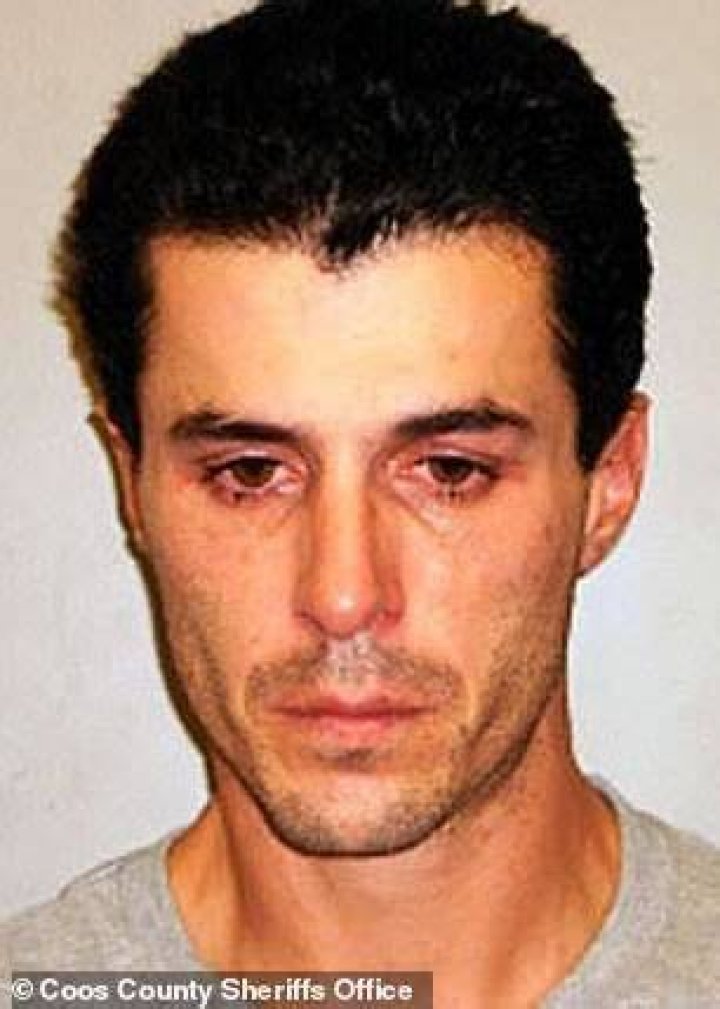
After 15-year-old Leah Freeman's murder case went cold for eight years, her high school boyfriend, Nick McGuffin, was arrested and charged with killing her in 2010.
4

4
Freeman disappeared on June 28, 2000, after her boyfriend dropped her off at a friend's house.
When McGuffin came to pick her up a couple of hours later for a date, her friend said that Freeman had already left.
Freeman's body was later found outside of her hometown of Coquille, Oregon.
Before finding her body, her gym shoes - one of them bloody - were all the physical clues police had to figure out what happened to her.
READ MORE TRUE CRIME
The bloody shoe played a key role in freeing McGuffin from prison 20 years after her death.
With now 37-year-old McGuffin being the only person ever to be convicted of killing Freeman, he said that he wants "to keep Leah's name in the light."
"To bring her name forward, to get somebody to come forward with the truth of what happened," he told ABC News.
"To get resolution for myself, for her family."
Most read in The US Sun
He said that he's innocent, which he has always maintained.
"They found…vindicating DNA evidence that finally shows what I've been saying for nearly 20 years.”
When McGuffin and Freeman were dating, he was a high school senior while she was a 15-year-old freshman.
Freeman's mother Cory Courtright said that their age difference bothered her but McGuffin “seemed like an OK kind of guy."
“I found out that they were being sexually active, and that was disturbing to me,” Courtright said.
“It caused some conflict between Leah and I."
TEEN'S DISAPPEARANCE
After dropping her off at Cherie Mitchell's at 7pm, McGuffin said that he didn't see Freeman again that night - though he had plans to pick her up a couple of hours later for a double date.
Mitchell said that she and Freeman got into an argument about how much time Freeman was spending with McGuffin.
After that, she said Freeman stormed off out of the house.
“I followed her out to the road and that’s when I told her: ‘It’s just, it’s not about you,’” Mitchell said.
“He was trying to take her away and take her away to do things that I wasn’t really welcome [to join].”
When McGuffin arrived to pick Freeman up from Mitchell's house at 9pm, Mitchell told him that she had already left.
She was reportedly last seen walking near her high school downtown alone, according to witness testimony.
McGuffin said that he drove around for hours searching for Freeman, even looking for her at a Fast Mart that they were familiar with.
"There was different people there every time… They didn't see Leah. I didn't see Leah," he said.
He said he spoke to police officers on two different occasions on his search for Freeman in his 1967 Ford Mustang.
ABC News reported that officers pulled him over for having a broken headlight.
McGuffin said that he later asked his high school friend to help him look for Freeman.
He said that he saw Kristen Steinhoff earlier that day and they did drive around for about an hour or so in her car.
“I dropped Kristen off. … I think it was around 2 [in the morning], probably. I decided to go by Leah's house one more time,” McGuffin said.
He said that he saw a glare in her bedroom window that he thought was her television.
"It was 2000. It's not like she could send me a text," he said.
"She couldn't call me on a cell phone. So I thought she was home, and I went home after that.”
TEEN REPORTED MISSING
Freeman's mother went to police the next day after Freeman never turned up.
The night she went missing, a mechanic found and picked up one of her gym shoes by a cemetery near the high school.
ABC News reported that he believed it may have been one of his kids' shoes.
Days later, he realized that it may be connected to the missing girl and turned it in to police.
Freeman's other shoe was found about a week later, outside of town with blood on it.
Her decomposing body was found on a wooded embankment eight miles away - through back roads from where the first shoe was found - about five weeks after she went missing.
McGuffin told ABC News that when he heard the news, “it was like my world was over.”
He said it was the saddest moment that he'd ever gone through.
INVESTIGATION LAUNCHED
McGuffin said that he voluntarily went to the police for interviewing and turned over his Mustang in hopes it would help with the investigation.
He was called in again for questioning after his initial meeting.
He allowed officers to take photos of him and later learned that they were checking for defensive wounds.
McGuffin said that he tried to move on with his life as time went on and the case went cold but was unable to grieve Freeman properly while people saw him as a suspect in her death.
He found a passion for cooking and graduated from culinary school and later became head banquet chef at The Mill Casino in North Bend, Oregon.
McGuffin had a daughter in 2007, after starting a new relationship. He said that she brought a sense of renewal into his life.
Police were unable to make any arrests in Freeman's case as time passed.
COMMUNITY BACKLASH
The community of Coquille, a town of about 4,000 residents, grew more and more upset that her killer hadn't been caught.
Coquille got a new police chief in 2008 and Mark Dannels pushed to have the case re-examined.
“When I arrived in Coquille...everybody was talking about the Leah Freeman case," Dannels said.
"And one of the expectations as a new police chief was, ‘What are you going to do about it, chief?’”
Dannels assembled a team from across the state to organize and consolidate all the old files and re-examine the case with fresh eyes.
They went back through the evidence, interviewing hundreds of witnesses in Freeman's case.
“When they reopened the investigation…I just figured the truth will come out and the real person or persons would be found," McGuffin, who would eventually be arrested for Freeman's murder, said.
"And so, yeah. I mean, I didn't see any of this coming."
During the round of re-investigating, police questioned Steinhoff, who helped McGuffin look for Freeman on the night she disappeared.
She told the police that McGuffin had stopped by her house around midnight.
She said they smoked marijuana, and when he then tried to have sex with her, she says she told him to stop.
ABC News reported that McGuffin admitted to smoking with Steinhoff and that he kissed her that night, but he said everything else she claimed wasn’t true.
“The things Kristen and I did that night, when we were kissing, was wrong. I accept that,” McGuffin said.
“It doesn't mean just because I did that…that I didn't care about [Leah]. It's not an easy thing to deal with.”
McGuffin was arrested and charged with murder on August 23, 2010.
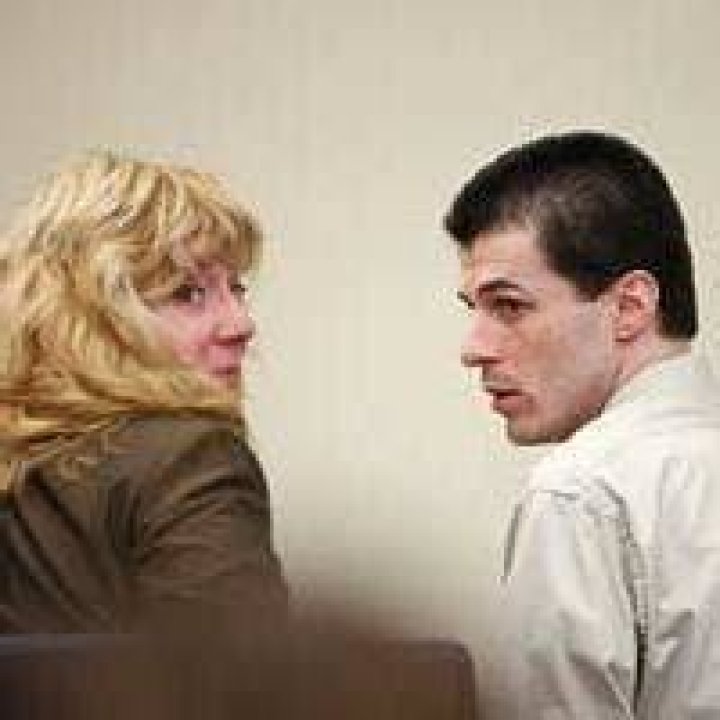
At his trial in 2011, a witness said that he had seen McGuffin and Freeman together some time after she left Mitchell’s home.
McGuffin maintained that he never saw Freeman after he dropped her off at Mitchell’s.
ABC News reported that 10 of the 12 jurors voted to convict McGuffin on the lesser charge of manslaughter instead of murder.
Oregon was only one of two states that allowed non-unanimous jury verdicts in criminal felony cases at the time of his trial.
McGuffin was sentenced to 10 years in prison, first serving them at Snake River Correctional Institution before being sent to a labor camp in Tillamook State Forest for good behavior.
Steinhoff died just five years after McGuffin's conviction.
OVERTURNED
Attorney Janies Puracal looked into McGuffin’s case in 2014, finding “bombshell evidence” that an unidentified man’s DNA was on Freeman’s shoes.
This resulted in McGuffin’s conviction being overturned as when Freeman’s shoes were tested in 2000, the Oregon State Crime lab discovered something that DNA technology 20 years ago could not conclusively determine.
“At the time, we used interpretation guidelines that didn’t necessarily discern or distinguish really low levels of DNA,” said Chrystal Bell, Forensic Services Division Director for the Oregon State Police.
“As a result of that, the analysts at the time chose to be very conservative and chose not to actually call out that potential male DNA because she couldn't decide what it was.
“So she made no conclusions or statements about that DNA because it was at a very, very low level."
Bell said it was entirely up to the analyst’s “discretion over what they were going to report” at the time.
McGuffin went to trial in 2011 and by then, DNA technology was advanced enough that the sample was able to be re-analyzed, determining that it was a man’s DNA.
Nobody connected to the case asked for a re-testing because they had no idea the sample existed.
“Had they asked us to re-examine that evidence, we would have done so,” said Bell.
“We don't always have an automatic trigger to go back and do re-examination every time we get additional evidence, whether it's two years later or five years later or 10 years later.”
Puracal made the request in 2017.
'HUGE MOMENT' IN THE CASE
“Finding that exculpatory DNA on the shoes, that was a huge moment for our case,” she said.
“That was a game-changer for us. We were looking for DNA that would tell us who actually committed this crime.
"And here, there was DNA of some other man on the victim's bloodstained shoe … and never reported.
"That changed everything for us.”
Judge Patricia Sullivan agreed with Puracal and ruled in 2019 that there was a “reasonable probability” that McGuffin’s guilty verdict would have been different if the presence of the unknown man’s DNA was disclosed.
“However, without the DNA evidence, Trial Counsel was reduced to showing that (Nick McGuffin) could not have committed the crime and was not able to produce any evidence of an alternative theory,” wrote Sullivan.
McGuffin’s conviction was set aside and remanded back to trial court, however, Coos County District Attorney Paul Fraiser said that he would not seek a retrial due to several factors.
VICTIM'S FAMILY'S PLEA
One of the biggest was that it went against the wishes of Freeman's mother.
“She just flat told me, ‘I cannot take the strain of another trial. I can't do it,’ and she asked me not to try the case again,” said Fraiser.
At this point, McGuffin had served about 97 percent of his sentence.
Nine years after his conviction, McGuffin walked out of prison a free man.
“I just knew that we had to fight and we had to fight for what's right,” he said.
Since his release, McGuffin has struggled to put the pieces of his life back together.
“After my exoneration...I had an idea of what it was going to be like, and I was wrong. It's not easy. It's actually really hard,” he said, adding that the DA, law enforcement, and crime lab should have some accountability for what they did.
“All I'm asking is for accountability and for them to do their jobs properly.”
He is now working on re-establishing his relationship with his 12-year-old daughter and looking forward to resuming his career as a chef, though he says it hasn’t been easy.
McGuffin also said that he thinks a lot about Freeman and is determined to find answers about who killed her.
“I want people to come forward with the truth. I just want the truth. I want to know what happened,” he said.
Read More on The US Sun
Read More on The US Sun
“[We] have a chance right now to clean the slate to make it right. I mean, I'm pretty sure a lot of people would want that.
"I know Leah would. I know her family wants that. I want the truth for them. What more can I ask for?”
4

4