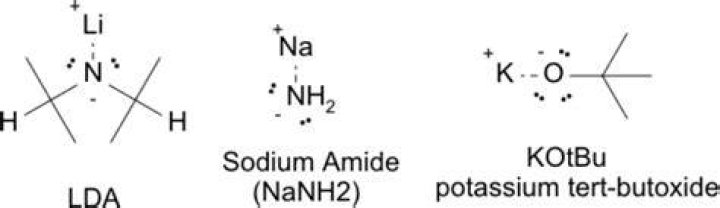
Is KOtBu a strong base?

James Austin
Published Oct 24, 2026
Answer
Additionally, there are certain bases that are strong, NON-nucleophilic bases due to the fact that they are severely sterically inhibited. KOtBu is an example of a base that fits this description. The anion of tert-butyl alcohol has a tremendous amount of base. Furthermore, it is not possible to be a nucleophile.
Is tert-butoxide a strong base in this sense, then?
It is the chemical molecule with the formula K+(CH3)3CO that is known as potassium tert-butoxide. This colourless solid is a strong base (pKa of conjugate acid is about 17), which makes it helpful in organic synthesis since it is non-reactive with water. It occurs as a tetrameric cubane-type cluster in its natural state. This compound is often referred to as potassium t-butoxide in chemical literature.
Furthermore, is etoh a stable foundation?
Once the carbocation intermediate has been formed, the two reactions proceed in opposite directions. Ethanol has a role as a nucleophile in the SN1 metabolic pathway. Ethanol is a base in the E1 metabolic pathway. Because the carbocation is such a reactive species, even a weak base/nucleophile such as ethanol may be used to replace or delete the carbocation.
Is Naotbu a sturdy basis, in the same way?
Salt tert-butoxide is the chemical compound with the formula (CH3)3CONa, which stands for sodium tert-butoxide. It has a strong base and is not nucleophilic, making it a good base to use. In the chemical literature, sodium t-butoxide is sometimes referred to as sodium t-butoxide.
Is ethoxide a strong base or a weak base?
Due to its strength as a base, sodium ethoxide is very corrosive in nature.
There were 38 related questions and answers found.
Is NaOCH3 a large-scale compound?
As a strong nucleophile and base, NaOCH3 will force a 2nd-order mechanism because of its high reactivity. Because it is a non-bulky base, the 2° alkyl halide will produce a combination of E2 and SN2 products when added.
Is NaOH a potent nucleophile in nature?
Consider the case of a species such as NaOH. It has the properties of both a strong base and a good nucleophile. For example, when it is involved in an elimination process and creating a bond with hydrogen, we refer to this as the base’s activity. Similar to this, when it forms a bond with carbon (as in the case of a substitution reaction), we refer to it as operating in the role of a nucleophile.
What Characteristics Make a Good Nucleophile?
Charge. “The conjugate base is usually a superior nucleophile,” says the author of the book. The nucleophile HO- is superior than the nucleophile H2O. The higher the negative charge on an atom, the more probable it is that it will give up its pair of electrons in order to establish a connection with another atom.
Is NaOH a good starting point?
It is a strong base because it completely dissociates in water, releasing hydroxide ions. NaOH is found in nature as a salt. While ammonia (NH3) is a weak base, this is due to the fact that it takes protons from water, resulting in fewer hydroxide ions being formed in solution. While weak bases create fewer hydroxide ions than strong bases, the solution becomes less basic as a result.
Which of the following is a stronger base Ethoxide?
In order to counteract the negative inductive action of ammonia, the ethoxide ion has a larger negative charge than ammonia. As a result, it has a greater strength as a base than ammonia.
Why is it necessary to weigh the potassium tert-butoxide as soon as possible after it has been weighed?
Why is it important to weigh potassium tert butoxide as soon as possible? The sterics and size of the molecule of potassium tert butoxide supported this once again, since it would prefer to accept a hydrogen from the terminal carbon rather than from inside the molecule.
Which is more powerful, the base ethoxide or the tert butoxide?
What makes tert-butoxide a stronger base than ethoxide is not entirely clear. This is mostly due to the effects of solvation on the water molecules. As a result of the inductive effect caused by the presence of more alkyl substituents in t-Butoxide in the gas phase, it is actually less basic than ethoxide in the liquid phase.
Is tert-butanol a good basis to start with?
Tert-butoxide is a strong, non-nucleophilic base in organic chemistry that is used to make other compounds. It quickly extracts acidic protons from substrates, but its steric bulk prevents it from engaging in nucleophilic substitution reactions such as a Williamson ether synthesis or an SN2 reaction, which are both examples of nucleophilic substitution.
Is HCl a potent Nucleophile in nature?
And as we all know, HCl is a powerful acid, and we also know that the stronger the acid, the weaker the conjugate base, which means that the chloride anion is a very weak base, which is why it will only behave as a nucleophile in our reactions.
Is koh an effective Nucleophile?
In addition, since the Bronsted-Lowry definition of a base is a proton (H+) acceptor, it is a very strong base because the OH- will rapidly take a proton from the acid (which is classified as a proton donor) due to the negative charge of the OH-, which makes it a very powerful nucleophile.
Is it true that all bases are nucleophiles?
All nucleophiles are Lewis bases, which means that they each contribute a single electron pair. A “base” (also known as a “Brnsted base”) is simply the moniker given to a nucleophile when it is creating a bond with a proton (H+) in a reaction. To recap, when we speak about basicity and nucleophilicity, we’re referring to these two sorts of processes that take place in nature.
Is water a nucleophile or a nucleophile-like substance?
Oxygen in water contains two lone pairs and a negative charge on its oxygen atom (oxygen is more electronegative than hydrogen). This shows that water may act as a nucleophile in certain situations. Because each hydrogen atom has a d+ charge, the molecule has the potential to act as an electrophile as well. Many compounds have the ability to act as both nucleophiles and electrophiles at the same time.
Post Views:7