What can an LPN do in Ohio?

James Austin
Published Oct 28, 2026
Answer
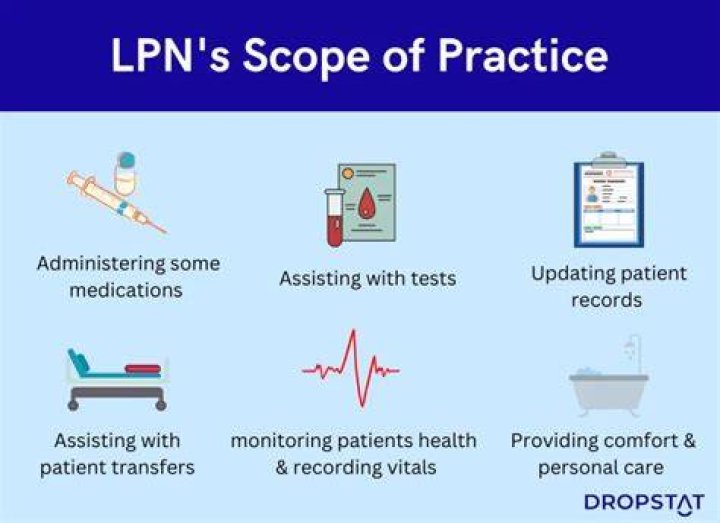
The most important distinction to understand is that an LPN must operate under the supervision of an RN and that they are only permitted to execute certain medical activities. Local practical nurses (LPNs) evaluate patients, keep track of important symptoms, and aid with wound care. Home health care, hospitals, clinics, and nursing homes are some of the most common places where they work.
Just to clarify, can LPNs provide medications in Ohio?
Ohio LPN IV Changes from March 2013 through the end of 2014 are summarised in this report. A central venous line, which may include a Peripherally Inserted Central Catheter (PICC), a tunnelled or non-tunneled port, or an implanted port can now be used to deliver antibiotics by IV-certified licenced practical nurses.
Furthermore, what is it that an LPN cannot do?
A licenced practical nurse (LPN) is not a “real” nurse. It is true that there are several RN activities that LPNs are not authorised to do on their own, such as delivering IV medications or performing a health evaluation.
Is it possible for LPNs to begin IVS in Ohio while keeping this in mind?
(1) A Licensed Practical Nurse (LPN) who has received certification from the Ohio Board of Nursing (OBN) indicating that she or he has successfully completed a course in intravenous treatment is authorised to conduct restricted intravenous therapy operations on adult patients.
Is it possible for an LPN to access a central line?
In order to practise as a licenced practical nurse, you must not do the following: – Administer intermittent intravenous solutions via a central venous line. This includes PICC lines, central venous chest ports, and central venous arm ports. As a Licensed Practical Nurse, you may: – Administer ONLY saline and/or heparin flushes via a peripheral IV line using the direct IV push method; or – Administer ONLY intravenous fluids through a peripheral IV line using the indirect IV push technique.
There were 31 related questions and answers found.
Is it legal for an LPN in Ohio to draw blood?
However, as a licenced practical nurse in Indiana and Kentucky, we are permitted to take blood. The Ohio Board of Nursing will provide the most appropriate response.
Is there a state that has the highest LPN salary?
Massachusetts, Rhode Island, and Connecticut are the highest-paying states for Licensed Practical Nurses, with each earning more than $57,000 a year — much more than the national average.
In Ohio, can a licenced practical nurse (LPN) hang IV antibiotics?
This language was removed from the law and rule, and LPNs with IV therapy certification (LPN-IV) are no longer prohibited from aspirating a line for the purpose of maintaining patency. Additionally, they are no longer prohibited from administering antibiotics through a central venous line or peripherally inserted central catheter (PICC).
Is it possible for an LPN to administer IV antibiotics?
In a dialysis environment, LPNs are permitted to provide heparin, but not any other IV medications. Nevada – Licensed practical nurses (LPNs) who have at least one year of experience and have completed a board-approved IV course are permitted to administer antibiotics or histamine H2 receptor antagonists by piggybacking a solution onto a prescription written by a registered nurse or medical doctor.
Is it possible for an LPN to hang TPN?
Using central venous catheters and central lines, the LPN may deliver fluids, medicine, Total Parenteral Nutrition (TPN), blood or blood products, access these lines for blood draws, or administer emergency cardiac drugs through IV push if any of the following occurs: The LPN maintains current certification in ACLS.
What is it that an LPN can perform with IV?
As a Licensed Practical Nurse, you may: – Administer ONLY saline and/or heparin flushes via a peripheral IV line using the direct IV push method; or – Administer ONLY intravenous fluids through a peripheral IV line using the indirect IV push technique. An LPN is not permitted to do the following tasks: – Check the patency of any central venous line, including PICC lines, central venous chest ports, or central venous arm port devices.
Can a licenced practical nurse (LPN) re-constitute medication?
Medications You Are Not Allowed to Administer Through an IV line, the Licensed Practical Nurse is not authorised to provide any form of medication (depending on the state). The LPN may flush a peripheral IV line in preparation for the Registered Nurse to administer an IV medicine, but the LPN is not permitted to administer the IV medication herself or herself.
Who is responsible for setting the standards of nursing practise in the state of Ohio?
The Ohio Revised Code 4723 is the law that governs the practise of nursing in the state of Ohio (ORC 4723). The Nurse Practice Act is the name given to this piece of legislation. Regulations and procedures adopted by administrative agencies established by legislatures constitute Administrative Law.
Is it possible for LPNs to start an IV?
Patient drug administration is permitted under certain state rules, although intravenous drip administration is permitted under other state regulations. In general, licenced practical nurses (LPNs) are responsible for aiding registered nurses and physicians by providing basic medical care to the patients under their supervision. Changing bandages, catheters, and IVs is a common task.
Is it possible for an LPN to predict the timing of death?
Yes, you may have an LPN on call, and since death is the most likely result, the on-call LPN can attend to the death scene and call the physician to report the absence of vital signs, if necessary. In this instance, the physician is the one who, strictly speaking, calls the patient dead and declares him to be dead.
Which is preferable: a licenced practical nurse or a medical assistant?
Despite the fact that the positions are identical, there are some significant distinctions. The most significant distinction is that an LPN is a Nurse, but a Medical Assistant is an Assistant in a medical setting. In addition, Medical Assistant courses emphasise ambulatory and emergency services, while LPN courses emphasise hospital and clinical care in a hospital setting.
Are Licensed Practical Nurses (LPNs) being phased out?
However, any notion that they are being “phased out” is unfounded and misleading. LPNs are in high demand in a variety of settings, including nursing homes, assisted living facilities, home care, and a variety of other settings. According to the Bureau of Labor Statistics, employment possibilities for licenced practical nurses (LPNs) would increase by nearly 11 percent between 2018 and 2028.
Is it possible for LPNs to provide IM injections?
A licenced practical nurse (LPN) is positioned below registered nurses (RNs) and nurse practitioners (NPs) in the nursing hierarchy (NPs). As a result, LPNs should refrain from administering injections. If your medical aesthetic clinic is currently using LPNs to deliver injections, AmSpa urges that you discontinue this practise immediately.
Is it still necessary for hospitals to recruit LPNs?
Licensed practical nurses are licenced and educated to provide care for stable patients, such as those in nursing homes and other institutions that provide care for less difficult patients, such as those in hospitals. Because licenced practical nurses (LPNs) are not licenced or educated to care for acutely ill or injured patients, hospitals do not often employ them.
Post Views:75