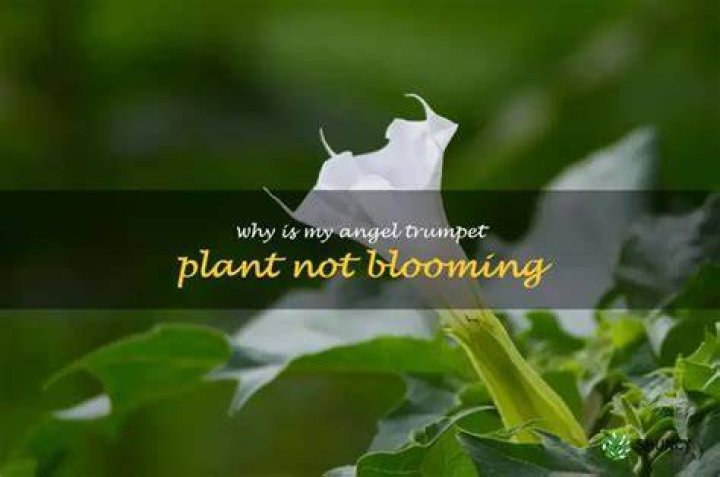
Why is my angel trumpet plant not blooming?

Samuel Coleman
Published Oct 30, 2026
Answer
You should check your brugmansia for signs of lack of blooms. It’s possible that the plant is lacking in fertiliser. This is due to the fact that a delayed release fertiliser may not provide the plant with enough nutrients to allow it to have the energy necessary to develop flowers.
Is there a way to make my angel trumpet blossom in this manner?
Plant an angel’s trumpet in a sunny location where it will get at least five hours of sunshine every day for best results.
From spring until autumn, water an angel’s trumpet often to keep the soil moist but not soaking wet.
In the spring, when the angel’s trumpet is just starting to develop anew, give it some food.
You’ll Need a Few Things.
Tip.
Warning.
References (7) Information about the author
Also, why isn’t my trumpet vine producing flowers?
It is possible for trumpet vines to not blossom if they get too much fertiliser or have too rich a soil. The use of phosphorus-rich fertilisers, such as bone meal, may help to promote the flowering of trumpet vines. Trumpet vine with no blossoms might result from pruning at the incorrect time. The blooming of the Trumpet vine happens on the fresh growth of the current year.
As a result, one can wonder why his or her Datura isn’t blooming.
The following are three factors that might induce bloom decline in Datura: insufficient light, insufficient fertiliser, and extreme heat. Daturas need full daylight in order to develop and bloom correctly, so make sure your lighting is enough. If your plant does not get at least 5 hours of direct sunlight every day, it may need to be relocated to a location that receives more sunlight.
When it comes to angel trumpets, what is the most effective fertiliser?
Use a balanced fertiliser with an N-P-K (nitrogen-phosphorus-potassium) ratio of 15-15-15 to feed young, freshly planted angel’s trumpets, which will support healthy root, leaf, and flower development. Using 1/2 teaspoon of fertiliser per gallon of water, make a solution. The fertiliser solution should be used to replace one watering per week.
There were 36 related questions and answers found.
Do angel trumpets have a taste for ground coffee?
It is possible to utilise coffee grounds as a fertiliser for flowerbeds, potted plants, tub plants, and house plants. Roses, geraniums, angel’s trumpets, oleanders, hydrangeas, rhododendrons, and azaleas are just a few of the plants that benefit from using coffee grinds as a fertiliser in their gardens.
Do you reduce the number of angel trumpets?
Pruning both plants stimulates growth and the production of fresh flowers. It will depend on whether you want to overwinter your plant outside or inside when the ideal time to prune it will be determined; interior plants should be clipped in the autumn, while outdoor angel trumpets must be pruned in the spring.
How long does it take for an angel trumpet to open up and flower?
I’m not of legal drinking age. Before a brugmansia to produce blossoms, it must have reached maturity. You could have to wait as long as five years for your brugmansia to blossom if it was planted from seeds. The time it takes for your brugmansia to bloom will depend on whether it was grown from a cutting or from a seed.
Do hummingbirds, like angels, make a trumpeting sound?
Hummingbirds, bees, and butterflies are attracted to the blossoms of the angel’s trumpet. Planting in a container and bringing it inside the home during the winter is OK.
What is the best way to care for an angel trumpet flower?
Gardeners should plant Angel’s Trumpets in a shaded place with bright, healthy, well-drained soil if they want to enjoy their blooms all year. In most regions, they will grow and blossom best in full sun, but in hot, dry conditions, they will benefit from light shade or dappled sunshine, particularly during the hot, mid-day sun, which will encourage flowering.
To what extent are angel trumpets harmful to handle?
The leaves, flowers, seeds, and roots of the angel trumpet are all very deadly, as are the blooms themselves. All of them include the toxic alkaloids scopolamine, atropine, and hyoscyamine, which are frequently manufactured into current pharmaceutical chemicals but are lethal poisons if taken without a doctor’s care. Scopolamine, atropine, and hyoscyamine are the most dangerous of the alkaloids.
What is the best way to root a Brugmansia cutting?
Getting Brugmansia Cuttings to Grow Remove all of the bottom leaves from the brugmansia before putting it in water to root. Change the water on a regular basis, and as roots begin to emerge, transfer the cuttings to a soil-like environment. If you want your cutting to root in soil, plant it approximately two inches deep in well-draining potting soil. Make things simpler on yourself by using your finger or a stick.
What much of water does an angel trumpet require?
Angel’s trumpets are strong feeders that need a steady supply of additional fertilisers throughout the flowering season, even if they are planted in an altered bed. Half a teaspoon of balanced, 15-15-15 ratio fertiliser dissolved in 1 gallon of water may be used to replace one watering per week.
What is the best way to care for a datura plant?
How to Take Care of a Datura Plant Planting Datura needs a combination of full light and wet, rich, well-drained soil. Because they are a tropical plant, they flourish in the warmer months and are not fond of the frost and cold of the winter months. If allowed to wither and die in the winter, every datura leaf will fall and the plant will almost certainly perish.
What portion of the datura plant is poisonous?
Toxicity. Tous les Datura plants contain tropane alkaloids, such as scopolamine and atropine. These alkaloids are found predominantly in their seeds and flowers, as well as the roots of certain species, such as Datura wrightii, and in their roots of other species. Because of the existence of these compounds, Datura has been employed as a poison in various societies for thousands of years.
When you smell datura, what does it smell like?
In the wild, datura is a wandering annual plant that flourishes in the proximity of human settlements. The sweet and distinctly erotic fragrance of this night-blooming plant is tainted by the strongly unpleasant smell of its deep green 6-inch leaves, which are sometimes used as a hallucinogen, or more precisely, as a potent deliriant, due to the strong unpleasant smell of its deep green 6-inch leaves.
Is it possible to get your hands on Datura?
Datura and toxicity are two words that come to mind. Datura seeds were planted from seed, and while I did not anticipate them to germinate, they did. Datura, according to one source, is not only hazardous if consumed, but it is also harmful to touch the plant or even smell the blooms up close because of the toxins they contain. Furthermore, they are said to be invasive, reseeding everywhere.
Where does Datura grow in its native environment?
From 1000 to 6500 feet in elevation, our species of holy datura thrives in the Chihuahuan, Sonoran, and Mojave deserts, as well as in the Sierra Nevada. The best places to look for it are sandy disturbed areas, beside roadsides, and in washes. Scientists classify the plant as a perennial herb with a deciduous appearance.
What is the appearance of the datura plant?
Datura plants grow quite fast and may reach heights of up to 4 feet. The blossoms have a pleasant fragrance, which is especially noticeable at night. The majority of flowers are white, however they may also be seen in other colours like as yellow, purple, lavender, and red. The stems are delicate yet upright, and they have a greyish green tint to them, which gives them their name.
Post Views:8